If you want to choose a perfect dog collar size for your dog this Dog Collar Size Guide is for you. You know, Choosing a dog collar sounds easy until you actually have to buy one. When you want to buy one, you will see small, medium, large, extra-large, adjustable, tactical, waterproof and personalized collars. Then you start wondering: What size does my dog really need?
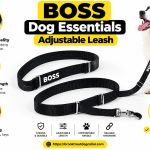
I have learned that guessing is one of the easiest ways to get a dog collar wrong. That is why i always advise buyers to check BOSS Dog Essentials Adjustable Leash.
Your dog may look like a medium-sized dog, but that does not necessarily mean a medium collar will fit. Two dogs of the same breed can have completely different neck sizes. Puppies can also outgrow a collar quickly.
That is why I always recommend starting with one simple thing: measure your dog’s neck before buying the collar.
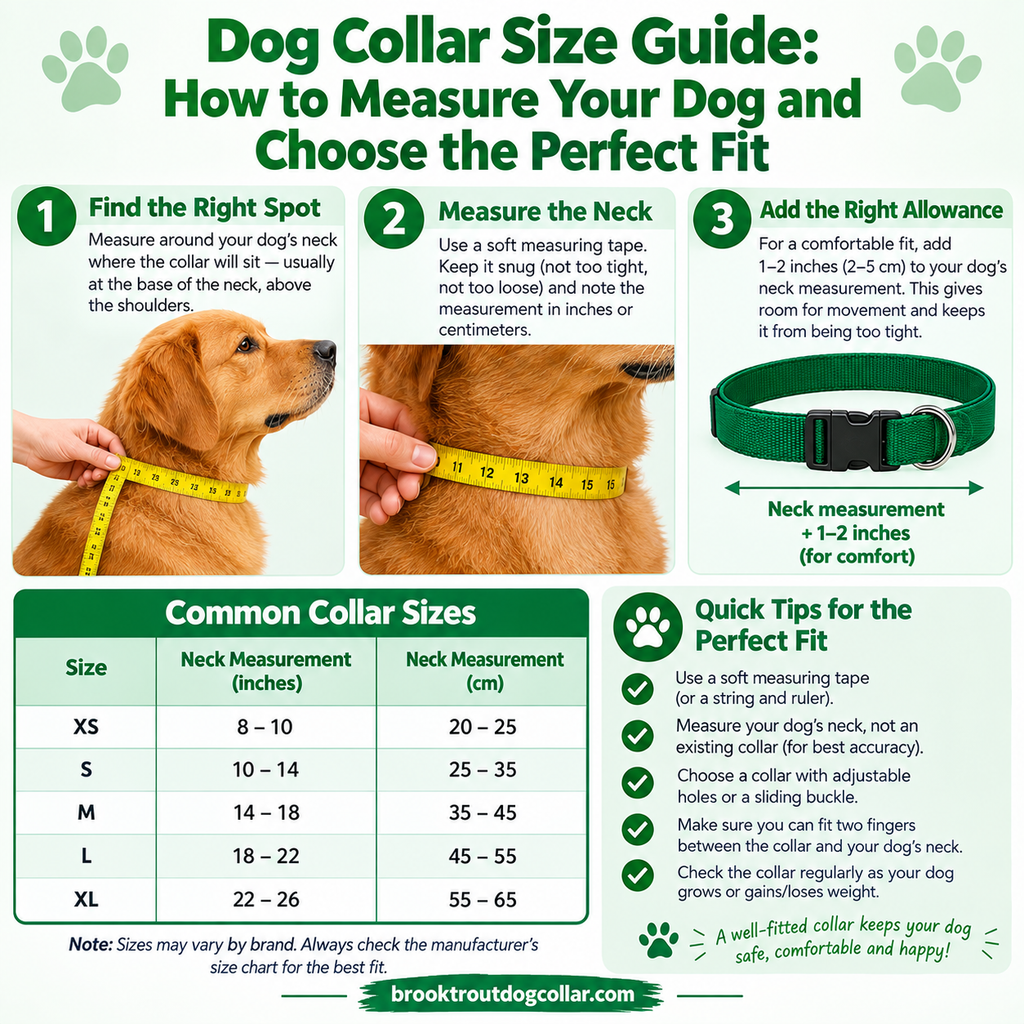
A properly fitted collar should be comfortable enough for everyday use but secure enough that your dog cannot easily slip out of it. The American Kennel Club also recommends measuring your dog’s neck and checking the manufacturer’s specific sizing information rather than relying only on breed or general size labels.
Why Getting the Right Dog Collar Size Matters
A collar that is too tight can rub against your dog’s skin and become uncomfortable.
A collar that is too loose creates a different problem. Your dog may be able to back out of it, especially if they are energetic, nervous or determined to escape.
I don’t think a dog collar should be treated as just a fashion accessory. It has to work for the actual dog wearing it.
Your dog’s size, neck shape, coat, activity level and daily routine should all influence your choice.
For example, a small indoor dog may need a lightweight collar, while a strong dog that spends weekends hiking, camping or exploring outdoors may need a more durable collar and hardware.
This is one reason I like the approach behind BrookTrout Dog Collar. The focus is not only on appearance but also on size, durability, comfort and the dog’s intended lifestyle.
Dog Collar Size Guide How to Measure Your Dog’s Neck for a Collar
You don’t need expensive equipment to measure your dog.
A soft measuring tape is ideal. If you don’t have one, you can use a piece of string, ribbon or even a shoelace and then measure the string against a ruler. The important thing is to keep your dog standing naturally while you measure.
Step 1: Keep Your Dog Calm
Don’t try to measure your dog when they are jumping around the house.
Get your dog into a relaxed standing position. If your dog is easily distracted, have someone give them a small treat while you take the measurement.
A calm dog makes the process much easier and gives you a more accurate measurement.
Step 2: Find Where the Collar Will Sit
Place the measuring tape around your dog’s neck where the collar normally sits.
Don’t measure extremely high around the throat and don’t measure far down around the shoulders.
The goal is to measure the part of the neck where you expect the collar to rest.
Step 3: Wrap the Tape Around the Neck
Wrap the tape around the neck.
Keep it snug, but do not pull it tightly against the skin.
You want a realistic measurement that leaves room for a comfortable collar fit.
The AKC recommends allowing appropriate space between the collar and the dog’s neck and emphasizes checking the finished collar fit rather than simply relying on a number.
Step 4: Write Down the Measurement
Let’s say you measure your dog’s neck and get 18 inches.
Don’t immediately buy an 18-inch collar.
Instead, look at the collar’s adjustment range.
For example, if a collar says:
16–22 inches
an 18-inch neck measurement should fall comfortably within that range.
But if the collar says:
14–18 inches
your dog may be right at the maximum adjustment, which may not give you enough flexibility. This is why the measurement range matters just as much as the size label.
The Two-Finger Fit Test
This is one of the easiest ways to check a collar after putting it on your dog.
Once the collar is fastened, try sliding your fingers between the collar and your dog’s neck. You want the collar to be secure without squeezing the neck.
The commonly used two-finger guideline is also reflected in AKC collar-fitting guidance. However, don’t treat the two-finger rule as a substitute for common sense.
Your dog’s size, coat thickness and collar design matter. A very fluffy dog may feel different from a short-haired dog even when the measurement is identical.
After adjusting the collar, watch your dog move.
Can they walk normally?
Can they look down?
Can they turn their head?
Does the collar rub against the skin?
Can the collar slide over their head?
These are all useful checks.
Dog Collar Size Chart: Use Measurements, Not Guesswork
Here is a simple starting point:
| Dog Size | Approximate Neck Range | What to Look For |
|---|---|---|
| Very Small | 6–10 inches | Lightweight, narrow and adjustable |
| Small | 9–14 inches | Comfortable everyday collar |
| Medium | 12–18 inches | Adjustable and durable |
| Large | 16–24 inches | Strong material and hardware |
| Extra Large | 20–30+ inches | Heavy-duty construction and correct adjustment |
Important: These are only general ranges, not universal sizes.
Different manufacturers use different measurements. Always compare your dog’s actual neck measurement with the specific collar’s sizing chart before buying. Your dog’s breed alone should not determine the collar size.
What If Your Dog Is Between Two Sizes?
This is where many dog owners get confused.
Suppose your dog’s neck measures 17 inches and you are choosing between:
- Small: 12–17 inches
- Medium: 16–22 inches
I would generally look at the medium because your dog’s measurement isn’t sitting at the extreme end of the adjustment range.
A slightly adjustable collar gives you room to make small changes as necessary.
This is especially important with puppies because they can grow quickly.
Don’t buy a collar that your puppy will “eventually grow into” if it is currently too loose. A collar needs to fit properly now, not six months from now.
Don’t Choose a Collar Based Only on Your Dog’s Breed
This is one of the biggest mistakes I see people make.
Someone might say:
“I have a German Shepherd, so I need a large collar.”
But which German Shepherd?
A young puppy, a slim adult and a heavily built adult can have completely different neck measurements.
The same thing happens with Labradors, Rottweilers, Pit Bulls, Huskies, Bulldogs and mixed breeds.
Breed can give you an idea of what to expect, but your measuring tape gives you the actual answer.
That is why BrookTroutDogCollar.com we recommends measuring the dog’s neck and comparing it with the manufacturer’s sizing information rather than selecting a collar based solely on breed.
Choose the Right Collar for Your Dog’s Lifestyle
Getting the size right is only half of the job.
You also need to think about what your dog actually does every day.
For Everyday Dogs
If your dog mostly stays around the house and goes on normal walks, a comfortable adjustable collar may be all you need.
Look for:
- Comfortable material
- Secure buckle
- Strong D-ring
- Adjustable sizing
- Space for an identification tag
For Active Outdoor Dogs
If your dog goes hiking, camping, fishing or on long outdoor walks, I would pay more attention to durability.
Your dog’s collar may encounter:
- Mud
- Water
- Grass
- Sand
- Dirt
- Pulling
- Rough surfaces
In that situation, a collar designed for outdoor use makes more sense than choosing one purely because it looks attractive.
BrookTrout Dog Collar specifically focuses on outdoor dogs and recommends considering moisture resistance, durability, construction and the dog’s activity level when selecting a collar.
For Dogs That Love Water
If your dog swims or regularly accompanies you near rivers, lakes or beaches, think about how the collar will handle moisture.
A water-resistant or waterproof material can make maintenance easier.
But remember something important: water-resistant does not mean indestructible.
Check the stitching, buckle and D-ring regularly for signs of damage and replace the collar if its construction becomes compromised.
My Recommended Choice: An Adjustable Brook Trout Dog Collar
If I were choosing a collar for an outdoor-loving dog, my preference would be an adjustable Brook Trout-inspired dog collar that matches the dog’s measured neck size.
I like this type of collar because it combines something practical with a little personality.
If you enjoy fishing, hiking, camping or spending time around the water with your dog, a trout-themed collar fits naturally into that lifestyle.
BrookTrout Dog Collar also offers personalized collar guidance, including options that can incorporate your dog’s name or identification information, depending on the product.
Why I would choose an adjustable version
The main advantage is flexibility.
Instead of buying a collar that barely fits your dog’s neck measurement, an adjustable collar gives you room to fine-tune the fit.
That becomes particularly useful when:
- Your dog is still growing
- Your dog has thick fur
- Your dog gains or loses weight
- You want a little adjustment during grooming
- You use the collar regularly outdoors
But I would still check the actual manufacturer’s size range before ordering. “Adjustable” doesn’t mean one collar fits every dog.
How to Use the Collar Correctly
Buying the right collar is only the beginning. Here’s how I would put it to use.
1. Adjust the collar before going outside
Put the collar around your dog’s neck and adjust it while your dog is calm.
Make sure it is secure without being excessively tight.
2. Perform the finger test
Check the space between the collar and your dog’s neck.
You should be able to fit the appropriate amount of space without the collar moving excessively.
3. Attach the identification tag
If your dog ever gets separated from you, identification information can be extremely useful.
A personalized collar can also make it easier to keep important information close to your dog, depending on the product design.
4. Attach the leash to the correct D-ring
If the collar is designed for leash attachment, connect your leash to the designated D-ring.
Before every walk, quickly inspect the ring, buckle and stitching.
5. Watch how your dog moves
Don’t just put the collar on and assume everything is fine.
Walk your dog around the house first.
Look for rubbing, discomfort or attempts to remove the collar.
6. Check the collar regularly
Dogs change.
Puppies grow. Adult dogs can gain or lose weight. Grooming can also change the amount of fur around the neck.
So I wouldn’t measure your dog once and forget about it forever. Make collar checks part of your normal dog-care routine.
Collar or Harness: Which Should You Use?
A collar isn’t automatically the right walking equipment for every dog.
Some dogs that pull strongly may be better managed with a properly fitted harness, depending on their individual needs. AKC notes that harnesses can shift pressure away from the neck and may offer advantages for dogs that pull.
That doesn’t make collars useless.
A collar can still be useful for identification, everyday wear and dogs that are comfortable walking appropriately on a collar.
The important thing is to choose equipment based on your dog’s behavior, body and activity level.
Don’t Forget the Leash
A good collar works even better when paired with the right leash.
If your dog is active, you may also want to explore our guides on different leash options, including the BOSS Dog Essentials Adjustable Leash and the Boss Dog Tactical Dog Leash.
For dogs that regularly encounter water, our Dogline Biothane Waterproof Dog Leash review is another useful resource to read before choosing your leash.
The goal isn’t to buy the most expensive equipment.
The goal is to create a setup that makes sense for your particular dog and the activities you do together.
How Often Should You Check Your Dog’s Collar?
I recommend making it a habit.
Check the fit whenever you notice your dog’s body changing, after grooming, during puppy growth and whenever the collar appears unusually tight or loose.
Also inspect the physical condition of the collar.
Look at:
- Stitching
- Buckle
- D-ring
- Adjustment section
- Material
- Signs of fraying
- Cracks or damage
BrookTrout Dog Collar similarly recommends regularly inspecting outdoor collars and replacing them when the material, stitching or hardware becomes compromised.
Final Thoughts
I used to think choosing a dog collar was mostly about finding something that looked good.
Now I see it differently.
The perfect dog collar starts with a measurement.
Measure your dog’s neck. Check the manufacturer’s sizing range. Put the collar on properly. Test the fit. Then consider your dog’s lifestyle before deciding which material and design make sense.
If your dog spends a lot of time outdoors with you, an adjustable and durable Brook Trout-inspired collar can be a practical choice while also giving your dog a distinctive look.
And if you’re building a complete outdoor setup, don’t stop at the collar. Look at the leash, identification options and other equipment based on what you and your dog actually do together.
Most importantly, don’t buy a collar simply because the label says “small,” “medium” or “large.”
Measure first. Choose second. Adjust carefully.
That simple habit can make your dog’s collar more comfortable, secure and useful every day.


Leave a Reply