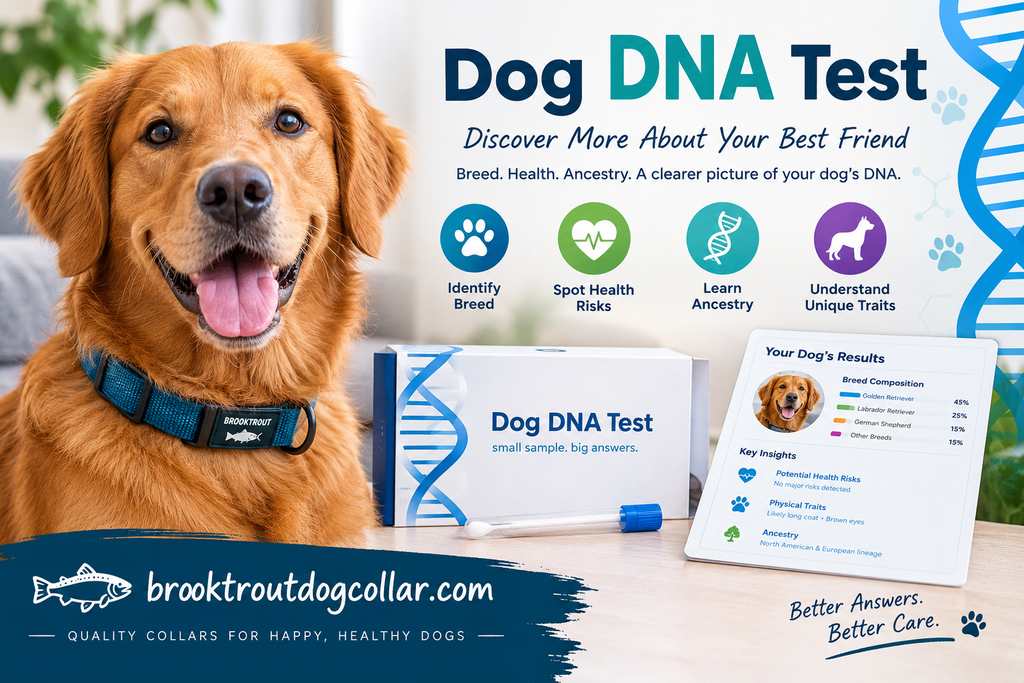
Have you ever looked at your dog and wondered what breeds are hiding behind those eyes, that is why i always recommend Dog DNA Test. You might be seen thick coat, or long legs. Maybe you adopted your dog from a shelter, and nobody could tell you much about its parents. Or maybe your dog looks like a German Shepherd but behaves like a completely different breed.
You are not alone in asking these questions.
A dog DNA test can help you uncover your dog’s genetic background, identify certain inherited genetic variants, and learn more about some traits your dog may carry. Depending on the test you choose, it may also help identify biological relatives or verify parentage.
But there is something every dog owner should understand before spending money on a testing kit: a DNA report is a source of information, not a complete description of your dog or a guarantee of future health.
A breed test and a health test do different jobs. A test designed to confirm parentage may not reveal breed ancestry at all. Even a health panel cannot identify every disease your dog might develop.
So, i decided to throw more light on this topic for those who are still confused about their dog DNA. I will explain how dog DNA testing works, what you can discover, how to choose the right kit, and how to use the results to make better decisions about your dog’s care.
So, make sure your read and follow my instructions as always.
IVDD in Dogs: Signs, Stages, Treatment, Recovery and What Dog Owners Should Know
Why a Dog DNA Test Is Important
If your asking why people do dog dna, the following reasons are why is important to do dna test for your dogs:
| Importance of Dog DNA Testing | Benefits to Dog Owners |
|---|---|
| Identifies your dog’s breed | Helps discover which breeds may contribute to your dog’s genetic background. |
| Identifies inherited health risks | Detects certain genetic variants associated with inherited diseases. |
| Supports early health planning | Helps veterinarians determine whether additional screening or monitoring is needed. |
| Explains physical traits | Provides information about inherited characteristics such as coat colour, length, and texture. |
| Supports responsible breeding | Helps breeders make informed decisions about inherited genetic conditions. |
| Reveals ancestry | Provides clues about your dog’s genetic history and breed composition. |
| Identifies potential relatives | Some testing services can identify possible biological relatives through DNA comparisons. |
| Provides clues about breed tendencies | Offers insight into inherited tendencies without determining your dog’s entire personality. |
| Guides care discussions | Helps owners discuss appropriate exercise, nutrition, and care with their veterinarian. |
| Helps evaluate breeders | Allows puppy buyers to ask about genetic screening performed on parent dogs. |
| Reduces guesswork | Provides genetic information beyond what you can determine from your dog’s appearance. |
| Supports long-term care | Helps owners and veterinarians use relevant genetic findings to inform preventive care decisions. |
Note: A dog DNA test cannot guarantee your dog’s future health or diagnose every disease. Results depend on the test used and should be interpreted appropriately.
What Dog DNA Test Tell You?
A good DNA test can provide valuable information, but the specific findings depend on its laboratory methods, database, and testing panel.
Your Dog’s Possible Breed Mix
Breed identification is one of the main reasons people purchase dog DNA kits.
Imagine adopting a medium-sized dog with a curly tail, a broad chest, and upright ears. Someone tells you it looks like a Husky. Another person thinks it is a German Shepherd mix. You might spend years guessing without knowing which opinion is correct.
A breed ancestry test compares your dog’s genetic markers with reference samples associated with different breeds. The laboratory uses those comparisons to estimate the breeds that best explain the DNA patterns it detects.
Your results might suggest ancestry from breeds such as:
- Labrador Retriever
- German Shepherd
- Siberian Husky
- Beagle
- Poodle
- American Pit Bull Terrier
The actual findings depend on the dog and the test’s reference database.
Breed ancestry may help explain some physical characteristics, but it does not always explain everything about your dog’s appearance. Mixed-breed dogs inherit different combinations of genetic material, so two dogs from the same litter can look surprisingly different.
Important: Breed percentages are estimates, not a precise historical record of every ancestor. Different testing companies may produce different results because they use different reference populations, algorithms, and reporting thresholds.
Potential Inherited Health Risks
Some dog DNA tests screen for genetic variants associated with particular inherited conditions.
These findings may be useful to owners who want to understand a dog’s genetic background or discuss appropriate preventive care with a veterinarian.
Depending on the breed and panel, a test may examine variants associated with certain eye conditions, neurological disorders, metabolic diseases, or other inherited problems.
However, there is a major distinction between carrying a genetic variant and having a disease.
A positive result may mean that your dog carries a variant associated with a condition. Whether that variant causes disease, increases risk, or has little effect depends on the specific condition, how it is inherited, and the available scientific evidence.
Some conditions involve multiple genes and environmental influences. Others have genetic causes that current commercial panels do not test for.
For this reason, a negative result does not mean your dog is free from every inherited disorder.
If your dog’s report identifies a potentially serious finding, discuss it with your veterinarian before making decisions about medication, screening, exercise restrictions, or treatment.
Coat Colour, Type, and Other Genetic Traits
Certain tests examine variants associated with coat colour, coat length, texture, and other inherited physical traits.
These findings can be particularly interesting for breeders who want to understand how particular traits may be passed to future generations.
Some tests also report genetic markers associated with characteristics such as body size or other physical features. The usefulness of these predictions varies.
A DNA test cannot perfectly predict every visible feature. Many characteristics depend on multiple genes, and some are influenced by age, nutrition, hormones, and environment.
It is also important not to confuse a genetic association with a guarantee. A report may identify a variant linked to a particular trait without fully explaining how that trait will appear in your individual dog.
For more details check American Kennel Club What to Know About Dog DNA Tests.
How Does a Dog DNA Test Work?
Most home DNA testing kits follow this straightforward process.
Step 1: Choose the right test
Decide whether you want breed ancestry, genetic health screening, trait information, parentage verification, or a combination of these.
Read the product description carefully. A kit marketed for genetic identity may not include breed identification or health screening.
2: Collect a DNA sample
Many home kits include a cheek swab.
You gently collect cells from inside your dog’s mouth using the supplied swab, following the manufacturer’s instructions.
Some kits require your dog to avoid food, treats, or contact with other dogs for a specified period before sampling. Follow the exact instructions supplied with your kit.
3: Send the sample to the laboratory
Return the sample using the company’s specified packaging and shipping procedure.
Check whether the service accepts samples from your country, whether international shipping is supported, and whether customs or return-shipping requirements apply.
This is particularly important if you are ordering from outside the country where the company operates.
4: The laboratory analyses the DNA
The laboratory examines the genetic markers included in its testing process.
For breed ancestry, the results are compared with reference samples. For health screening, the laboratory looks for the particular variants included in the panel.
The laboratory cannot reliably report a condition or trait that the test was not designed to assess.
5: Review the report
You may receive your results through an online account or another delivery method specified by the company.
Your report might contain breed estimates, health findings, trait information, or relative matches.
Take time to understand the terminology before drawing conclusions. If a finding could affect your dog’s health or breeding plans, discuss it with an appropriate veterinary professional.
How Much Does a Dog DNA Test Cost?
The price depends on the testing company, the number of features included, the laboratory methods, and any optional services.
Check the table bellow check Dog DNA test prices:
| Type of test | Illustrative price range (USD) |
|---|---|
| Basic breed identification | $60–$100 |
| Breed identification with additional features | $80–$150 |
| Breed and expanded genetic health screening | $100–$200+ |
| Targeted veterinary or specialist genetic testing | Varies by test and laboratory |
Actual prices can fall outside these ranges. Promotions, shipping, taxes, currency conversion, and laboratory fees may change the final amount.
Before paying, check whether the quoted price includes:
- Laboratory analysis
- Return shipping
- Breed identification
- Health screening
- Relative matching
- Access to future report updates
- Veterinary interpretation or consultation
Do not automatically choose the cheapest kit. A lower-priced test may be perfectly suitable if you only want breed ancestry. If you are investigating a particular inherited condition, however, you need a test that specifically examines the relevant variant and is suitable for your dog’s breed or genetic background.
Are Dog DNA Tests Accurate?
Dog DNA tests can provide useful results, but accuracy is not one single measurement that applies equally to every product.
A company may identify common breed ancestry well while offering a health panel that does not cover every relevant variant. Another test may be designed for parentage verification rather than ancestry estimation.
To judge a test properly, consider three things.
First, look at the purpose of the test. Does it identify breed ancestry, examine a defined genetic variant, or verify parentage? A result is meaningful only when you understand what the laboratory set out to measure.
Second, examine the evidence behind the test. Look for clear explanations of the laboratory process, reference populations, test limitations, and scientific validation. A large number of markers does not automatically mean better results for your particular dog.
Third, consider sample quality. Incorrect collection, contamination, or insufficient DNA can affect testing. Follow the sampling instructions and contact the provider if it requests another sample.
The American Kennel Club notes that ancestry estimates rely on reference samples and that health findings must be interpreted in the context of the particular genetic variant. Canine genetic testing providers can also differ in their reliability and testing methods.
How to Choose the Best Dog DNA Test
The best dog DNA test is the one that matches your reason for testing and explains its findings clearly.
Before buying a kit, use this checklist.
| What to check | Why it matters |
|---|---|
| Testing purpose | Confirms that the kit covers ancestry, health, traits, or parentage as needed |
| Reference database | Helps you understand which breeds and populations the company can compare |
| Health panel details | Shows which genetic variants are actually tested |
| Scientific validation | Helps you assess the evidence supporting individual results |
| Sample collection | Makes it easier to collect and return a usable sample |
| Report explanations | Helps you understand positive, negative, and uncertain findings |
| Privacy policy | Explains how your dog’s genetic data and account information are handled |
| Shipping availability | Confirms that the kit and return service work in your country |
| Total cost | Prevents unexpected shipping, tax, or optional-service charges |
Should you choose a breed-only test or a breed-and-health kit?
Choose a breed-only test if your main question is ancestry and you do not need genetic health screening.
Choose a combined test if you want ancestry information and screening for specific inherited genetic variants, provided the additional panel is relevant to your dog.
If you are concerned about a particular condition, investigate whether a targeted test has been validated for that condition and whether your veterinarian recommends it. A broad panel is not automatically better than a focused test.
For breeding decisions, consult the relevant breed club’s health recommendations and a veterinarian with appropriate expertise.
Dog DNA Test vs. Veterinary Genetic Testing
These terms overlap, but they do not always describe the same service.
| Feature | Consumer dog DNA kit | Veterinary or specialist genetic testing |
|---|---|---|
| Main purpose | Often ancestry and optional health screening | Investigating a defined clinical or breeding question |
| Sample | Often a home cheek swab | May involve a cheek swab, blood, or another sample |
| Test selection | Usually a predefined commercial panel | Can be selected to address a specific concern |
| Interpretation | Company report and support resources | May be interpreted alongside clinical findings |
| Best use | Learning about ancestry and selected genetic markers | Supporting a veterinary assessment or specialist breeding decision |
The distinction is not absolute. Some consumer tests include scientifically useful health screening, and veterinarians may recommend commercially available kits.
Can a Dog DNA Test Help You Take Better Care of Your Dog?
Yes, in some situations, but only when you turn the findings into sensible actions.
A DNA report becomes useful when it helps you ask better questions, plan appropriate screening, or understand your dog’s background without making assumptions.
Use ancestry as a starting point, not a diagnosis
If a report identifies ancestry associated with a breed known for certain health concerns, discuss relevant screening with your veterinarian.
Do not assume your dog has a condition simply because it has ancestry from that breed. Equally, do not ignore symptoms because your dog has a different genetic background.
Use health findings to guide a conversation
If a genetic test identifies a disease-associated variant, ask your veterinarian:
- What does this particular result mean?
- Does it indicate carrier status, increased risk, or a different genetic classification?
- Is there a recommended clinical examination or follow-up test?
- Does the finding change anything about my dog’s current care?
- Should other family members or potential breeding partners be tested?
These questions help turn a laboratory report into a practical care plan.
Match equipment to your dog’s actual needs
Breed ancestry may offer clues about your dog’s likely size or activity tendencies, but choose equipment based on the individual dog.
For example, a comfortable, well-fitted collar and a suitable leash are important regardless of whether your dog is a purebred or a mixed breed.
BrookTrout Dog Collar readers can explore these related guides:
- BrookTrout Dog Collar — explore the site’s dog collar topic.
- Dogline Biothane Waterproof Dog Leash — learn more about a waterproof leash option.
- Boss Dog Tactical Dog Leash — review a tactical leash option.
A DNA report does not tell you which collar or leash will fit safely. Measure your dog’s neck, consider its strength and walking habits, and prioritise a secure fit.
Common Mistakes to Avoid When Buying a Dog DNA Test
Dog owners can get more value from testing by avoiding a few common mistakes.
1. Buying a kit without checking what it measures. A parentage profile may not identify breed ancestry or genetic diseases.
2. Assuming more markers always means better results. A large panel can include variants that are not relevant to your dog’s breed or circumstances.
3. Treating a positive health result as a confirmed diagnosis. The meaning depends on the variant, inheritance pattern, and evidence for that condition.
4. Treating a negative result as a lifetime health guarantee. The test only assesses the variants or markers included in its panel.
5. Using breed percentages to predict behaviour. Training, socialisation, health, and individual temperament matter.
6. Ignoring sample instructions. Contamination or an inadequate sample can delay testing or affect the quality of the result.
7. Making major medical or breeding decisions without advice. Discuss important findings with a veterinarian or an appropriately qualified canine genetics specialist.
8. Ignoring privacy. Read the company’s policy to understand how it stores genetic data, handles account information, and allows you to manage or delete data where supported.
What Should You Do After Receiving Your Dog’s DNA Results?
Getting the report is only the first step. How you respond to it matters more.
Start by separating the results into three categories.
Ancestry and traits: Record the estimated breed composition and any relevant trait findings. Use them as clues rather than absolute explanations of appearance or personality.
Health-related findings: Identify any variants that may have clinical significance. Ask your veterinarian to explain the result and determine whether follow-up is appropriate.
Parentage or relative matches: Confirm that the service was designed for identity or parentage verification if that is what you need. Contact the provider if you require a formal result for breeding or registration purposes.
Keep a copy of the report alongside your dog’s medical records. If you change veterinarians, this information may be useful, provided you clearly distinguish genetic screening findings from confirmed diagnoses.
Finally, do not let an unexpected result change the way you treat your dog without a good reason. A DNA report should help you understand your pet, not make you fear every possible health problem.
Frequently Asked Questions About Dog DNA Tests
What is the most accurate dog DNA test?
There is no single test that is best for every purpose. Accuracy depends on whether you want breed ancestry, a specific genetic health result, or parentage verification. Compare the provider’s methodology, reference database, validation evidence, and the exact tests included in the kit.
Are DNA tests worth the money?
They can be worthwhile if the information answers a question you genuinely have. An ancestry test may satisfy your curiosity about a rescue dog’s background, while a suitable health test may help you discuss an inherited risk with your veterinarian. The value depends on the test’s relevance and how you use the findings.
Can a dog DNA test identify every breed in a mixed-breed dog?
No. Breed ancestry reports are estimates based on the company’s reference populations and analysis methods. Closely related breeds, small ancestry contributions, and limited reference samples can make some results difficult to classify precisely.
How long does a dog DNA test take?
The turnaround time varies by company, sample quality, shipping method, and laboratory workload. Check the provider’s current estimate and whether it starts counting from the date the kit is activated, the sample is received, or laboratory processing begins.
Can I perform a dog DNA test at home?
Many consumer kits allow you to collect a cheek swab at home and mail it to a laboratory. You normally do not perform the genetic analysis yourself. Follow the kit’s instructions and confirm that the service accepts samples from your location.
Does a DNA test prove that my dog is purebred?
A breed ancestry test alone cannot establish official purebred status. Breed registries generally rely on documented pedigree and their own registration rules. If you need to verify parentage, choose a test specifically designed for that purpose.
Can a DNA test predict my dog’s lifespan?
A standard breed ancestry test cannot reliably tell you how long your individual dog will live. Genetics may influence some health risks, but lifespan also depends on many other factors, including healthcare, nutrition, environment, and chance.
Do two dogs from the same litter get different DNA results?
Biological siblings inherit different combinations of DNA from their parents. Their reports can therefore show different breed proportions, particularly when their parents have mixed ancestry. The testing company’s methodology can also influence the estimates.
Should I test my dog for genetic diseases?
That depends on your dog’s breed or background, family history, symptoms, and the condition you want to investigate. Ask your veterinarian which tests are relevant. If your dog is already unwell, prioritise a clinical examination rather than relying on a consumer DNA kit.
My Final Verdict
A dog DNA test can help answer fascinating questions about your pet’s ancestry and provide useful information about selected genetic traits or inherited health risks.
But the smartest approach is to start with your goal.
If you want to understand your mixed-breed dog’s background, choose a test designed for breed ancestry. If you want to investigate a potential inherited condition, look for a validated test that covers the relevant genetic variant and discuss the results with your veterinarian. If you need to confirm biological parentage, choose a parentage test rather than an ancestry kit.
Do not buy a test simply because it promises hundreds of results. Buy one that answers the questions that matter to you and your dog.
At BrookTroutDogCollar.com, our goal is to help dog owners make better-informed decisions about their pets, from understanding their background to choosing suitable everyday gear. DNA testing can be one useful part of that process, but attentive care, appropriate training, and regular veterinary attention remain essential.
Also Check
Dog Collar Size Guide: How to Measure Your Dog and Choose the Perfect Fit
BOSS Dog Essentials Adjustable Leash: Features, Size, Uses & What to Know Before Buying
Boss Dog Tactical Dog Leash Review: Everything You Need to Know Before Buying
Dogline Biothane Waterproof Dog Leash Review: Is It Actually Worth Buying?
Bowsers Oslo Ortho Dog Bed Review: Sizes, Comfort, Pros, Cons & What to Know Before Buying




Leave a Reply