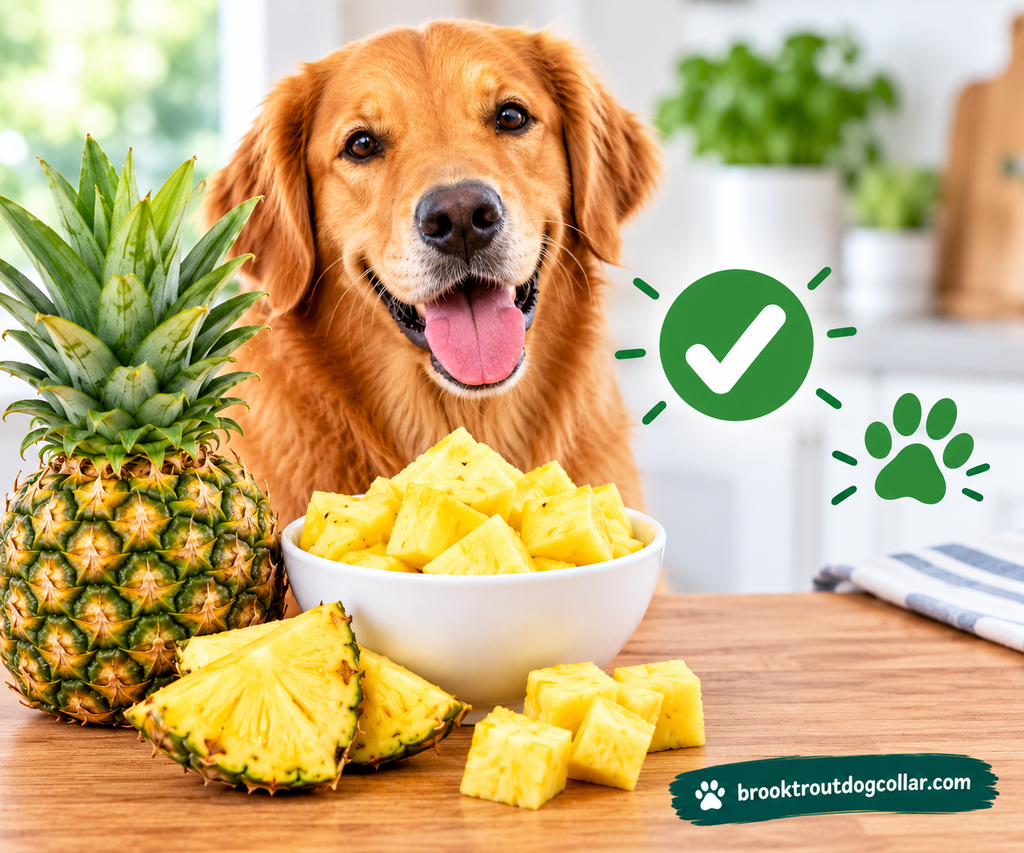
Let say your are cutting a fresh pineapple when your dog walks over, sits beside you, and watches every bite. You know pineapple is a healthy fruit for humans, but in your mind your asking Can Dogs Eat Pineapple?
My answer is Yes, dogs can eat fresh pineapple in small amounts, provided you remove the tough skin, hard core, stem, and leafy crown first. The soft flesh contains water, fiber, vitamins, and minerals. However, pineapple also contains natural sugar and acidity, so too much can cause digestive discomfort.
The important thing is knowing which parts are safe, how much to offer, and when pineapple may not be suitable for your dog.
In this guide, I will explain how to feed pineapple safely, what benefits it offers, which forms to avoid, and what to do if your dog eats the wrong part. You will also learn whether pineapple can stop dogs from eating poop and whether puppies can enjoy this fruit. If your new to this blog do yourself a favor by checking some of our previous posts bellow:
IVDD in Dogs: Signs, Stages, Treatment, Recovery and What Dog Owners Should Know
Dog Collar Size Guide: How to Measure Your Dog and Choose the Perfect Fit
Quick Answer: Is Pineapple Safe for Dogs?
Yes. Most healthy dogs can eat a little fresh, ripe pineapple as an occasional treat. It is not a replacement for a complete and balanced dog food.
Here are the essential rules:
- Safe option: Fresh, ripe pineapple flesh cut it into small pieces.
- Avoid: The hard core, spiky skin, stem, and leafy crown.
- Limit: The amount because pineapple contains natural sugar and fiber.
- Be cautious: If your dog has diabetes, a sensitive stomach, weight problems, or a medical condition requiring dietary restrictions.
- Monitor: Stop feeding pineapple if your dog develops vomiting, diarrhea, or other concerning symptoms.
Veterinary experts also recommends keeping treats, including fruit, to a small proportion of your dog’s daily calorie intake. A commonly used guideline is that treats should account for no more than 10% of daily calories, with the remaining calories coming from a complete and balanced diet.
1. Is Pineapple Good for Dogs?
Pineapple can be a useful occasional treat, but it is not a nutritional necessity for dogs.
Fresh pineapple contains water, carbohydrates, dietary fiber, vitamin C, several B vitamins, and minerals such as manganese and potassium. These nutrients contribute to normal body functions, although your dog should already obtain the nutrients it needs from a suitable, balanced diet.
Here is what pineapple can offer.
It provides water
Fresh pineapple contains a high proportion of water. A few small pieces can add moisture to your dog’s treat routine, especially during warm weather.
However, pineapple should never replace clean drinking water. Make sure your dog always has access to fresh water.
It contains vitamins and minerals
Pineapple supplies vitamin C, vitamin B6, manganese, and other nutrients. These play roles in normal metabolic processes, cellular function, and overall health.
Healthy dogs generally produce their own vitamin C, so you do not need to feed pineapple specifically to provide it.
It contains dietary fiber
Fiber can contribute to normal digestive function. However, more fiber is not automatically better.
A large serving of pineapple may upset your dog’s digestive system, particularly if your dog is not accustomed to fruit.
It contains bromelain
Pineapple contains bromelain, a group of enzymes that break down proteins. This is one reason the fruit attracts attention in discussions about digestion and inflammation.
However, the presence of bromelain does not prove that ordinary servings of pineapple treat inflammation, improve a dog’s digestion, or provide a measurable medical benefit. Do not use pineapple instead of veterinary treatment.
The bottom line: Pineapple offers some useful nutrients, but its main role in a dog’s diet should be an occasional snack rather than a health supplement.
2. How Much Pineapple Can a Dog Eat?
This is one of the most important questions dog owners ask. For me the answer depends on your dog’s size, usual diet, activity level, health, and tolerance for new foods.
There is no single pineapple serving that suits every dog. Start with one or two tiny pieces and see how your dog responds before offering any more on another occasion.
The following table provides a cautious starting point, not a veterinary-prescribed serving size.
| Dog size | Cautious starting portion |
|---|---|
| Toy or very small dog | One tiny piece |
| Small dog | One or two small pieces |
| Medium dog | Two or three small pieces |
| Large dog | A few small pieces |
These are suggested starting portions for introducing the fruit, not amounts your dog must finish. Keep the pieces small enough to chew comfortably, and reduce the amount for dogs with lower calorie needs.
Follow the 10% treat rule
Veterinary nutrition guidance commonly recommends that treats make up no more than 10% of a dog’s daily calorie intake. The remaining 90% should come from complete and balanced food.
This is a limit for all treats combined not a pineapple allowance.
If you already give your dog training treats, biscuits, chews, or other snacks, pineapple needs to fit within that same treat budget. For dogs on a weight-management diet, even fewer treat calories may be appropriate.
What happens if a dog eats too much pineapple?
Too much pineapple can cause:
- Loose stools or diarrhea.
- Vomiting.
- Excessive gas.
- Stomach discomfort.
- Reduced appetite.
The natural sugar and fiber can be difficult for some dogs to tolerate in large quantities. Pineapple’s acidity may also bother dogs with sensitive stomachs.
If your dog develops persistent vomiting, severe diarrhea, abdominal pain, unusual weakness, or other worrying symptoms, contact a veterinarian. Do not continue offering pineapple to see whether the symptoms improve.
3. Which Types of Pineapple Can Dogs Eat?
Not every pineapple product is equally suitable for dogs. Processing methods, added ingredients, texture, and serving size all matter. Check the table bellow to see the type of pineapple dogs can eat:
| Pineapple type | Is it suitable? | What to know |
|---|---|---|
| Fresh pineapple flesh | Yes, in moderation | Remove the skin and core and cut into small pieces. |
| Frozen pineapple | Yes, with care | Use small pieces that are not so hard they risk damaging teeth or causing choking. |
| Canned pineapple in syrup | Avoid | The added syrup increases sugar intake unnecessarily. |
| Canned pineapple in juice | Better avoided | It may contain concentrated sugars or other ingredients. Fresh fruit is preferable. |
| Dried pineapple | Best avoided as a regular treat | Drying concentrates sugar, and some products contain added sweeteners. |
| Pineapple juice | Not recommended as a routine treat | It offers less fiber than whole fruit and can deliver sugar quickly. |
| Pineapple cake or dessert | Avoid | These may contain excessive sugar, fat, or other unsuitable ingredients. |
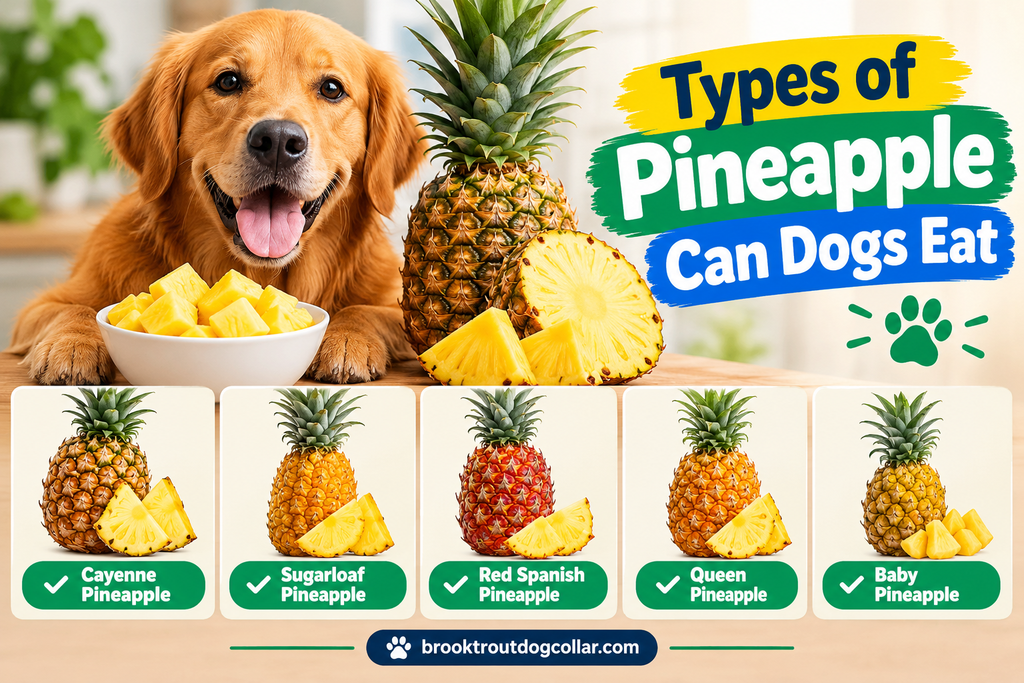
Can dogs eat fresh pineapple?
Yes. Fresh pineapple flesh is the best option when you want to share this fruit with your dog.
Choose ripe fruit, remove the outer skin and crown, cut away the hard center, and offer a small piece. Wash your hands and the preparation surface before serving, as you would when preparing food for yourself.
Can dogs eat canned pineapple?
It is better to choose fresh pineapple instead.
Canned pineapple may be packed in syrup or juice and can contain more sugar per serving than you intend to give your dog. Even products without syrup may not offer an advantage over fresh fruit.
If your dog accidentally eats a small piece of plain canned pineapple, it is not automatically an emergency. Check the ingredients, consider the amount eaten, and watch for digestive upset.
Can dogs eat frozen pineapple?
Yes, provided you prepare it appropriately.
Cut fresh pineapple into small pieces before freezing. Avoid offering large, rock-hard chunks, especially to small dogs, puppies, senior dogs, or dogs with dental problems.
Allow the pieces to soften slightly before serving. Frozen pineapple should be a treat, not a substitute for water or a complete meal.
Can dogs eat dried pineapple?
Dried pineapple is not the best choice.
Removing water makes the fruit smaller and more concentrated, so it becomes easier to feed a larger quantity of sugar than intended. Commercial products may also contain added sugar or other ingredients.
Fresh pineapple gives you better control over portion size and moisture.
Can dogs drink pineapple juice?
Whole pineapple is generally preferable to juice. Juice is easy to consume quickly and does not provide the same fiber as the whole fruit.
Avoid sweetened juice and products containing artificial sweeteners. Xylitol is toxic to dogs, so if your dog consumes a product containing xylitol, contact a veterinarian or animal poison-control service immediately.
4. Why Dogs Should Never Eat Pineapple Skin or Core
Removing the outer skin and hard core is not simply a matter of taste. These parts present physical hazards.
Pineapple skin
The rind is tough, fibrous, and spiky. Dogs may struggle to chew it properly, and it can irritate the mouth or digestive tract.
Pineapple core
The core is denser and harder than the flesh. Depending on its size and shape, it can cause choking or contribute to an intestinal blockage.
Pineapple leaves and stem
The crown leaves and stem are tough and fibrous. They are not appropriate treats and should be removed before you prepare the fruit.
What if your dog eats pineapple core or skin?
First, determine what your dog swallowed and approximately how much.
- If your dog is choking, struggling to breathe, or collapsing, seek emergency veterinary help immediately.
- If your dog swallowed a substantial piece of core or rind, contact a veterinarian promptly for advice, even if your dog initially appears normal.
- Do not induce vomiting or try home remedies unless a veterinarian specifically instructs you to do so.
- Watch for repeated vomiting, abdominal pain, loss of appetite, difficulty passing stool, or unusual lethargy.
A small accidental bite does not always lead to a problem, but the risk depends on the piece swallowed and the dog’s size. A veterinarian can help determine whether monitoring or an examination is necessary.
5. Can Puppies Eat Pineapple?
Puppies may be able to eat a tiny amount of fresh pineapple once they are fully weaned and eating solid food, but it is not a necessary part of their diet.
Young dogs have small mouths and developing dietary routines. Introducing too many new foods can make it difficult to identify the cause of an upset stomach.
If your veterinarian agrees that pineapple is appropriate for your puppy:
- Remove all skin, leaves, stem, and core.
- Cut the flesh into a very small, soft piece.
- Offer only a tiny amount.
- Watch for diarrhea, vomiting, itching, or other unusual reactions.
- Do not replace puppy food with fruit.
Puppies need complete and balanced nutrition formulated for growth. Treats should remain a small part of their diet.
If your puppy is very young, unwell, has persistent digestive symptoms, or follows a special diet, ask your veterinarian before introducing pineapple.
6. Can Dogs With Diabetes Eat Pineapple?
Do not assume that a fruit is appropriate for a dog simply because it is natural.
Pineapple contains natural sugar. For a dog with diabetes, the amount and timing of carbohydrates can matter when managing blood glucose.
Ask your veterinarian before offering pineapple to a diabetic dog. The same caution applies to dogs that are overweight, have a history of pancreatitis, or need a medically controlled diet.
For a healthy dog, a few pieces may fit into an occasional treat routine. For a dog with a medical condition, the right decision depends on its individual treatment and nutritional needs.
7. Can Pineapple Stop Dogs From Eating Poop?
You may have heard that feeding pineapple makes a dog’s stool taste unpleasant and stops the dog from eating it.
This behavior is called coprophagia. It can be frustrating, particularly when a dog repeatedly eats its own feces or those of other animals.
However, there is not strong scientific evidence that feeding pineapple reliably prevents coprophagia. Claims about bromelain changing stool taste are not a proven treatment.
Dogs may eat feces for several reasons, including learned behavior, curiosity, access to waste, or certain medical and nutritional issues. The cause is not always obvious.
Instead of relying on pineapple:
- Pick up feces promptly.
- Supervise your dog outdoors.
- Teach and reward a reliable “leave it” cue.
- Keep your dog’s diet complete and balanced.
- Arrange a veterinary assessment if the behavior begins suddenly, becomes persistent, or occurs alongside weight loss, diarrhea, or changes in appetite.
You can offer pineapple as an occasional treat if your dog tolerates it, but do not use it as a substitute for investigating the behavior.
8. How to Prepare Pineapple for Your Dog Safely
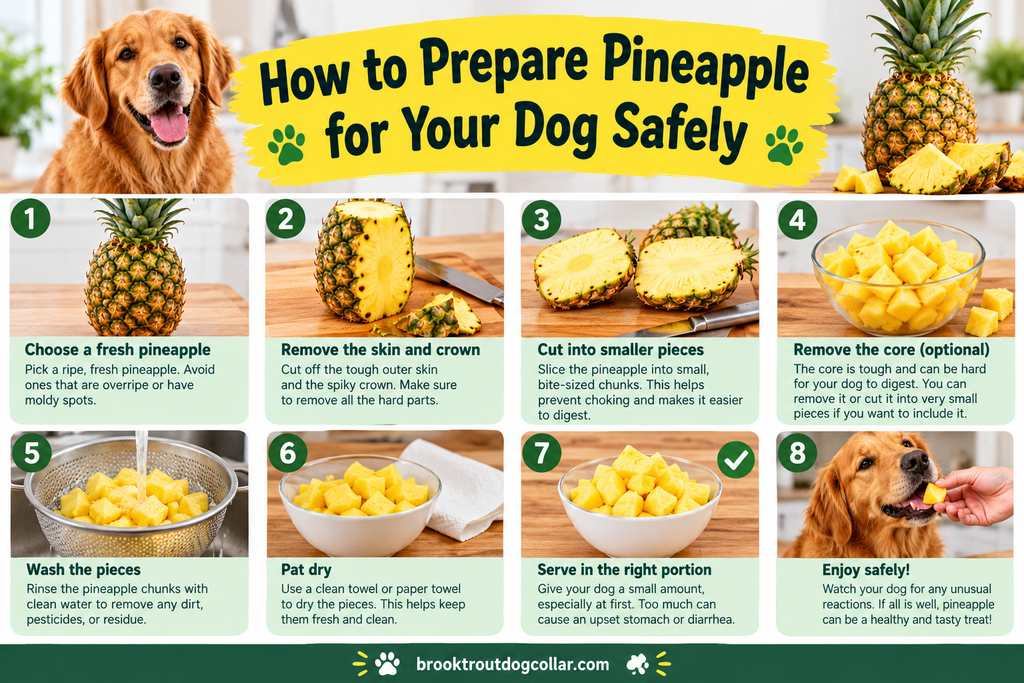
Preparing pineapple correctly takes only a few minutes. Just follow this steps:
Step 1: Choose fresh, ripe fruit. Avoid fruit that is spoiled or mouldy.
Step 2: Wash the outside. This helps reduce the transfer of dirt from the rind to the edible flesh during cutting.
Step 3: Remove the rind and crown. Cut away the spiky skin, stem, and leaves.
Step 4: Remove the hard core. Keep only the softer flesh.
Step 5: Cut the flesh into small pieces. Choose a size appropriate for your dog’s mouth rather than offering a large wedge.
Step 6: Offer a tiny first serving. Do not introduce pineapple alongside several other new foods.
Step 7: Observe your dog. Watch for digestive changes or other unusual symptoms.
If your dog enjoys the fruit and tolerates it well, you can offer a small amount occasionally while keeping all treats within its daily calorie allowance.
A simple pineapple treat idea
For a healthy adult dog that tolerates pineapple, you can offer a few small pieces of fresh fruit on their own.
If you want a cooler snack, freeze small pieces and allow them to soften slightly before serving. Avoid adding sugar, syrup, chocolate, or other ingredients that may be unsuitable for dogs.
There is no need to turn pineapple into an elaborate recipe. Simple preparation makes ingredients easier to monitor and portions easier to control.
9. Signs Your Dog May Not Tolerate Pineapple
Most healthy dogs will tolerate a tiny serving, but individual responses vary.
Stop offering pineapple if you notice:
- Vomiting.
- Diarrhea or unusually loose stools.
- Excessive gas.
- Abdominal discomfort.
- Refusal to eat.
- Unusual tiredness or weakness.
Mild digestive upset can occur after a dog eats too much of a new food, but you should not automatically assume pineapple is the cause of every symptom.
Seek prompt veterinary advice if symptoms persist or worsen. Repeated vomiting, severe abdominal pain, blood in the stool, marked weakness, or difficulty breathing require urgent attention.
Facial swelling or breathing difficulties after eating any food may indicate a serious reaction and warrant emergency veterinary care.
If your dog is otherwise well after eating one small piece of fresh pineapple flesh, there is generally no reason to panic. Continue observing your dog and avoid giving more until you are confident it has tolerated the food.
10. Is Pineapple Better Than Regular Dog Treats?
Not necessarily.
Pineapple offers moisture and some nutrients, while commercially prepared dog treats can be convenient for training, portion control, and specific uses. Neither option is automatically better for every dog.
The right choice depends on your dog’s health, calorie needs, preferences, and the purpose of the treat.
| Consideration | Fresh pineapple | Dog treats |
|---|---|---|
| Ingredients | One whole-food ingredient when served plain | Varies by product |
| Sugar | Contains natural sugar | Varies by product |
| Portion control | Requires cutting and measuring | Often easier with small training treats |
| Training | May be juicy or messy | Many products are designed for training |
| Special diets | May not suit every dog | Some options may suit specific needs |
| Nutritional role | Occasional snack | Occasional snack unless otherwise formulated |
If you use treats during training, choose pieces that are small enough for repeated rewards without adding too many calories. You can also use a portion of your dog’s normal food where appropriate.
For additional guidance about dog health and care, read our related guide: IVDD in Dogs: Signs, Stages, Treatment, Recovery and What Dog Owners Should Know.
Although that article covers a different subject, it can help readers explore another important aspect of canine health.
Frequently Asked Questions About Dogs and Pineapple
Can dogs eat pineapple every day?
Fresh pineapple is best treated as an occasional snack rather than a necessary daily food. Small amounts may suit some healthy dogs, but daily feeding can add unnecessary sugar and calories. Keep all treats within your dog’s calorie needs and ask your veterinarian if your dog has a medical condition.
How many pineapple pieces can I give my dog?
Start with one or two tiny pieces of fresh pineapple flesh. The appropriate amount depends on your dog’s size, health, and daily calorie needs. The introductory portion is not a target to increase automatically.
Can dogs eat pineapple skin?
No. Pineapple skin is tough, spiky, and difficult to digest. It can irritate the mouth or digestive tract and may contribute to choking or obstruction.
Can dogs eat pineapple core?
No. Remove the hard core before feeding pineapple to your dog. It can present a choking hazard or contribute to an intestinal blockage if swallowed.
Is canned pineapple toxic to dogs?
Plain canned pineapple is not necessarily toxic, but it is generally a poorer choice than fresh pineapple, especially when packed in syrup. Check the ingredients if your dog eats some accidentally, and contact your veterinarian if the product contains a potentially harmful ingredient or your dog develops symptoms.
Can dogs eat pineapple with yogurt?
A small amount of plain, unsweetened yogurt may be tolerated by some dogs, but dairy can cause digestive upset in dogs that do not tolerate lactose. Avoid sweetened products and anything containing xylitol. Fresh pineapple alone is the simpler option.
Can pineapple cause diarrhea in dogs?
Yes. A dog may develop diarrhea after eating too much pineapple because of its sugar, fiber, acidity, or individual sensitivity. Stop feeding it if symptoms appear and contact your veterinarian if the diarrhea is severe, persistent, or accompanied by other worrying signs.
Can dogs eat pineapple upside-down cake?
It is best not to share pineapple cake with your dog. Cake may contain excessive sugar and fat, and some recipes or products may include dangerous ingredients. If your dog eats cake containing xylitol or another potentially toxic ingredient, seek veterinary advice immediately.
Can dogs eat pineapple when they have an upset stomach?
Do not use pineapple to treat an upset stomach. Its acidity, sugar, and fiber may make digestive symptoms worse. If your dog is vomiting, has diarrhea, or seems unwell, ask a veterinarian what to feed and whether an examination is needed.
Does pineapple help dogs digest food?
Pineapple contains bromelain, an enzyme that breaks down protein. However, that does not mean ordinary portions of pineapple will meaningfully improve digestion or treat digestive disorders in dogs. A balanced diet and appropriate veterinary care remain more important.
What should I do if my dog eats a whole pineapple?
A whole pineapple includes a large amount of flesh as well as the rind, crown, and core. Remove any remaining fruit, assess what your dog swallowed, and contact your veterinarian promptly for advice. The main concerns include excessive sugar intake, digestive upset, and choking or obstruction from the tough parts. Seek emergency care if your dog is choking, struggling to breathe, or showing severe symptoms.
Final Verdict About the Question Can Dogs Eat Pineapple?
Yes, you can share a little fresh pineapple with most healthy dogs, provided you prepare it correctly and keep the portion small.
The best approach is simple: use fresh, ripe flesh, remove the skin and core, start with a tiny amount, and watch how your dog responds. Avoid sugary pineapple products, and consult your veterinarian before introducing it to a dog with diabetes or other dietary restrictions.
Remember that a fruit does not have to be part of your dog’s regular diet to be enjoyable. A balanced dog food, fresh drinking water, suitable exercise, and regular veterinary care matter far more than any single snack.
The safest pineapple treat is a small, properly prepared piece not a large serving or a substitute for your dog’s normal food.
Also Check
Dog Collar Size Guide: How to Measure Your Dog and Choose the Perfect Fit
BOSS Dog Essentials Adjustable Leash: Features, Size, Uses & What to Know Before Buying
Boss Dog Tactical Dog Leash Review: Everything You Need to Know Before Buying
Dogline Biothane Waterproof Dog Leash Review: Is It Actually Worth Buying?
Bowsers Oslo Ortho Dog Bed Review: Sizes, Comfort, Pros, Cons & What to Know Before Buying





Leave a Reply