If your looking for complete information about Dog Breed Bullmastiff, don’t worry i will explain everything in simple terms. Lets start with the description. Dog Breed Bullmastiff is an English origin special dog breed with a large, muscular known for its loyalty, courage, calm nature, and protective instincts. The appearance makes it an excellent watchdog, this breed can also be a loving family companion when it receives proper training, with good exercise, and care.
Before bringing a Bullmastiff home, you need to understand more than its size and appearance. You should know how it behaves around strangers, how much food it needs, which health problems to watch for, and whether your home and lifestyle are suitable for such a powerful dog.
Like i said earlier i will explains everything you need to know about the dog breed Bullmastiff, including its history, physical characteristics, temperament, lifespan, grooming, training, health, feeding, ownership costs, and essential equipment. If your new in this page, make sure you check some of my previous post bellow:
Dog DNA Test: What Your Dog’s DNA Can Reveal (And What It Can’t)
Can Dogs Eat Pineapple? 7 Safety Tips Every Dog Owner Should Know
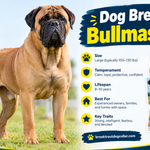
Quick Facts About the Bullmastiff Dog Breed
| Characteristic | Details |
|---|---|
| Dog breed name | Bullmastiff |
| Origin | England |
| Breed group | Working group |
| Male height | 25–27 inches |
| Female height | 24–26 inches |
| Male weight | 110–130 pounds |
| Female weight | 100–120 pounds |
| Average lifespan | Approximately 7–9 years |
| Coat type | Short and dense |
| Common coat colours | Fawn, red, and brindle |
| Temperament | Loyal, calm, confident, protective |
| Exercise needs | Moderate daily exercise |
| Grooming needs | Relatively low |
| Drooling | Can be moderate to heavy |
| Best suited for | Owners who can manage a large, powerful dog |
These figures are typical breed ranges, not guarantees for every individual dog. Genetics, diet, health, and living conditions influence a Bullmastiff’s development.
What Is a Bullmastiff Dog?
The Bullmastiff is a large working dog originally developed in England during the 19th century. Gamekeepers wanted a strong, courageous dog that could help protect private estates from poachers.
Breeders combined characteristics of the Mastiff and Bulldog to develop a dog with considerable strength, agility, endurance, and guarding ability.
Today, the Bullmastiff is valued for its protective instincts and close bond with its family. A well-raised Bullmastiff can be relaxed indoors while remaining alert to unfamiliar people or unusual activity around its home.
Despite its imposing appearance, the breed does not need to behave aggressively to be an effective watchdog. Its size, confidence, awareness, and willingness to protect its household can make it a powerful deterrent.
However, every dog has an individual personality. Responsible breeding, early socialisation, consistent training, and the owner’s behaviour all influence how a Bullmastiff responds to people and other animals.
How much does a Bullmastiff cost?
Bullmastiff prices vary by country, breeder, pedigree, health screening, availability, and demand. There is no reliable universal price that applies to every market.
When budgeting, consider the total cost of ownership rather than the purchase price alone. Food, veterinary care, training, secure equipment, grooming supplies, boarding, and emergency treatment can add significantly to the expense.
If you are buying in Nigeria, request current local prices and verify the seller’s reputation and health records before paying. Do not rely on foreign prices as an exact guide to the Nigerian market.
The Best Collar and Leash for a Bullmastiff
Because a mature Bullmastiff can weigh more than 100 pounds, choosing suitable walking equipment is an important part of responsible ownership.
A collar should fit securely without rubbing the skin or restricting breathing. You should be able to fit approximately two fingers between the collar and the dog’s neck, while checking that the dog cannot slip out of it.
Choose a sturdy, well-stitched leash with reliable hardware and a comfortable handle. Inspect the stitching, clips, and attachment points regularly for wear.
For dogs that pull, a properly fitted front-clip harness may provide better control than relying on a collar alone. A qualified trainer can help you choose equipment that suits your dog’s behaviour and physical needs.
Never use equipment as a substitute for teaching calm, reliable leash manners.
For more information about strong walking equipment, read our guide to the Boss Dog Tactical Dog Leash. Choose any product based on its actual size rating, construction, fit, and suitability for your dog.
Bullmastiff Appearance: How Big Does It Get?
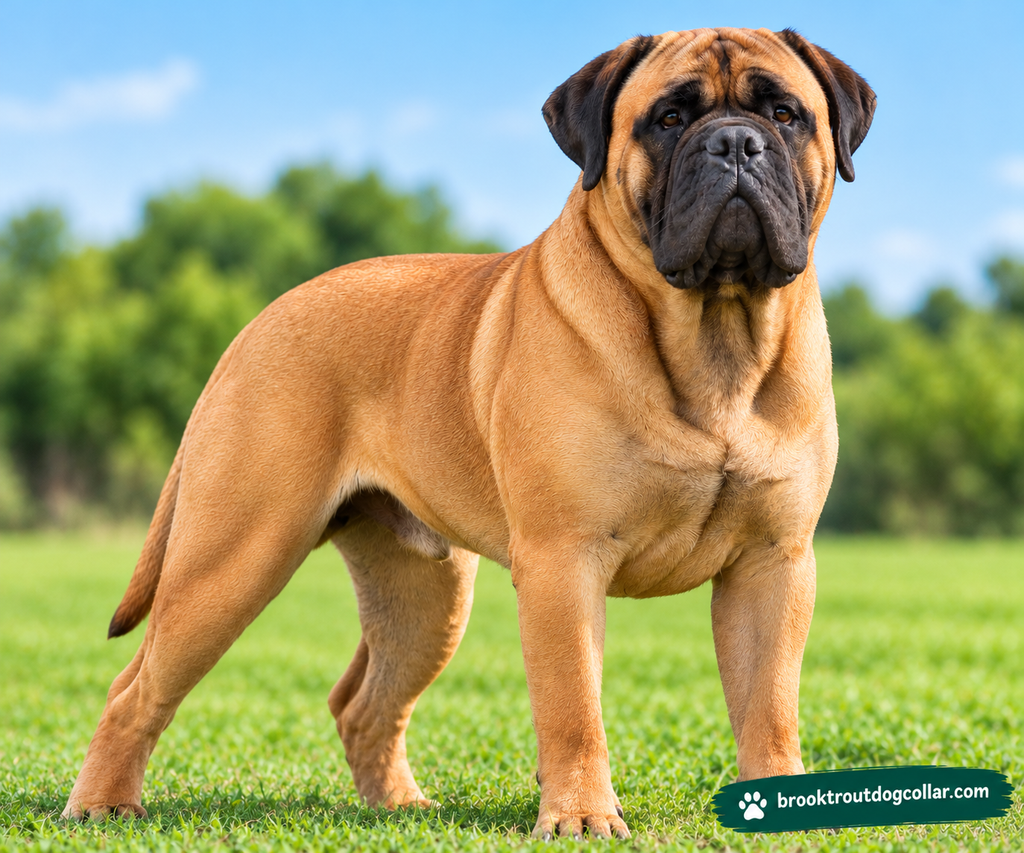
One of the first things people notice about a Bullmastiff is its powerful build. This is not a small dog that can be easily lifted or physically restrained by most adults.
Adult males typically weigh 110–130 pounds, while females usually weigh 100–120 pounds. Their height commonly ranges from 24 to 27 inches at the shoulder, depending on sex.
Physical characteristics
A typical Bullmastiff has:
- Broad head and strong jaw.
- Dark, expressive eyes.
- A short muzzle and muscular neck.
- Deep chest and powerful body.
- Strong legs and a sturdy frame.
- Short, dense coat.
- A dark facial mask in many individuals.
Is the Bullmastiff bigger than the English Bulldog?
Yes. The Bullmastiff is substantially taller and heavier than the English Bulldog. The Bullmastiff was developed partly from Bulldog ancestry, but the two breeds have different body sizes, exercise requirements, and management needs.
The Bullmastiff is also generally smaller than the English Mastiff, although both are giant, powerful breeds.
Is a Bullmastiff a Good Dog for First-Time Owners?
A Bullmastiff can be a rewarding companion, but it is not the easiest choice for an inexperienced owner.
The main challenge is not simply teaching a dog to sit. It is learning to manage a powerful animal that may weigh more than 100 pounds when fully grown.
A prospective owner should be comfortable with consistent training, early socialisation, veterinary expenses, daily exercise, and the practical responsibilities of owning a giant breed.
A Bullmastiff may suit you if you:
- Have enough space for a large dog to move comfortably.
- Can manage a strong dog on a lead.
- Have time for daily exercise and training.
- Can afford quality food and veterinary care.
- Are willing to supervise interactions with children and other animals.
- Can provide companionship rather than leaving the dog isolated for long periods.
It may be a poor match if you want a small, highly energetic running partner, dislike drool, cannot physically manage a strong dog, or expect a guard dog to protect your property without training.
How to Train a Bullmastiff Properly
Training should begin as soon as your puppy arrives home. Waiting until a Bullmastiff becomes large makes basic handling more difficult.
This breed can be intelligent and responsive, but some individuals are independent and may not repeat a behaviour simply because you demand it.
The best approach is calm, consistent, reward-based training.
Essential commands to teach
Start with these behaviours:
1. Sit: Helps the dog settle before meals, greetings, and other daily activities.
2. Stay: Teaches the dog to remain in place until released.
3. Come: Helps you call the dog back when it is safe to do so.
4. Leave it: Encourages the dog to move away from unsafe objects or unwanted items.
5. Loose-leash walking: Prevents pulling from becoming an established habit.
6. Place or settle: Gives the dog a predictable location where it can relax.
Keep training sessions short and positive. Reward the behaviour you want, use clear cues, and practise in different environments as the dog becomes more reliable.
Bullmastiff vs. Mastiff: What Is the Difference?
People sometimes confuse the Bullmastiff with the English Mastiff because both breeds have muscular bodies, broad heads, and a history of guarding.
However, they are separate breeds with different physical characteristics.
| Feature | Bullmastiff | English Mastiff |
|---|---|---|
| General build | Powerful and muscular | Generally heavier and more massive |
| Typical male weight | 110–130 pounds | Often substantially heavier |
| Original role | Estate guarding and deterring poachers | Historically used for guarding and other working roles |
| Coat | Short and dense | Short and dense |
| Activity | Moderate daily exercise | Moderate daily exercise, adjusted to the individual |
| Main consideration | Strength, socialisation, and control | Very large size, strength, and health management |
Both breeds need responsible ownership, but an individual dog’s health, temperament, and training matter more than generalisations about the breed.
Is the Bullmastiff the Right Dog for You?
The Bullmastiff can be a devoted companion for someone who appreciates a calm, confident, protective dog and understands the responsibilities that come with owning a powerful animal.
It is not an ideal choice for everyone. Its strength, size, potential health expenses, need for training, and sensitivity to hot weather require thoughtful planning.
Before buying or adopting one, assess your home, daily schedule, finances, ability to manage a large dog, and willingness to provide lifelong care.
If these responsibilities suit your circumstances, a well-raised Bullmastiff can become a valued member of your household.
Frequently Asked Questions About the Dog Breed Bullmastiff
Is a Bullmastiff a good guard dog?
Yes. The breed was developed to guard estates and retains protective instincts. Responsible training and socialisation are essential so that the dog can distinguish ordinary situations from genuine concerns without becoming unnecessarily reactive.
Are Bullmastiffs easy to train?
They can learn quickly, but some are independent and strong-willed. Start training early, reward good behaviour, and remain consistent. Their physical strength makes reliable obedience especially important.
Do Bullmastiffs need a big garden?
Not necessarily. They can adapt to some apartments and smaller homes if they receive suitable exercise, have enough indoor space, and can be handled safely. A secure garden is useful but does not replace walks and interaction.
Do Bullmastiffs shed a lot?
They have short coats and shed a moderate amount, with seasonal changes potentially increasing loose hair. Regular brushing helps keep shedding manageable.
Are Bullmastiffs expensive to maintain?
They can be costly to maintain because they eat more than smaller dogs and may require expensive veterinary care, sturdy equipment, and professional training. Plan for routine expenses and unexpected medical bills.
Can a Bullmastiff live with children?
Yes, some Bullmastiffs live very well with children. However, their size can cause accidental injuries, and all interactions should be supervised. Never leave a young child alone with a dog.
Are Bullmastiffs suitable for hot climates?
They can live in warm climates with careful management, but owners must limit strenuous activity during hot weather and provide shade, water, and cool resting areas. Watch closely for signs of overheating.
What is the difference between a Bullmastiff and a Pit Bull?
They are different types of dogs with distinct physical characteristics and breed histories. Bullmastiffs are generally much larger and were developed primarily for estate guarding. The term “Pit Bull” can refer to several related breeds or breed types, so comparisons depend on the specific dog.
What should I look for in a healthy Bullmastiff puppy?
Look for a puppy that has received appropriate veterinary care, has documented health and vaccination records, and comes from a breeder who can explain the parents’ health history and screening. A puppy’s appearance alone cannot establish its future health.
My Final Thoughts
The dog breed Bullmastiff combines impressive physical strength with the potential for a calm, affectionate, and loyal temperament. It can be an excellent companion for an owner who provides consistent training, proper nutrition, regular veterinary care, and responsible supervision.
The most important lesson is simple: choose a Bullmastiff because you are prepared to care for the dog, not just because you admire its size or guarding ability.
With the right preparation and a commitment to its wellbeing, a Bullmastiff can be much more than a watchdog. It can become a trusted companion and a lasting part of your family.
Also Check
Dog Collar Size Guide: How to Measure Your Dog and Choose the Perfect Fit
BOSS Dog Essentials Adjustable Leash: Features, Size, Uses & What to Know Before Buying
Boss Dog Tactical Dog Leash Review: Everything You Need to Know Before Buying
Dogline Biothane Waterproof Dog Leash Review: Is It Actually Worth Buying?
Bowsers Oslo Ortho Dog Bed Review: Sizes, Comfort, Pros, Cons & What to Know Before Buying



Leave a Reply